On this page
- Why one depth reading can't answer two questions
- Slack tide doesn't mean the depth has stopped changing
- A falling tide after you've anchored changes what 'enough chain' meant an hour ago
- The anchor holding and the keel clearing are two more separate questions
- How CapMate's chain calculator treats the two depths separately
- What this doesn't replace
- Questions
Why one depth reading can't answer two questions
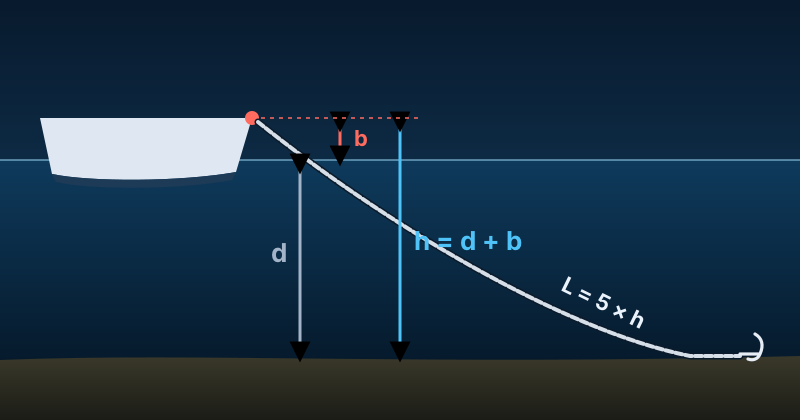
Scope is the ratio of chain to depth. You set it for the deepest water of the whole stay, because that is when the chain has the most to do. The swing circle works the other way round. In shallower water the chain lies flatter, so for the same length out the boat ranges further from the anchor. The depth that matters for one question is the wrong one for the other, and a single sounder reading at mid-tide answers neither.
| What you are deciding | Which depth to use | Why |
|---|---|---|
| Chain length (scope) | The highest water during the stay | Deeper water needs more chain |
| Swing circle and anchor alarm | The lowest water during the stay | In shallower water the chain lies flatter and the boat ranges further |
| Keel clearance | Charted depth at the lowest water against your draught | The alarm watches position, not the depth under the hull |
Slack tide doesn't mean the depth has stopped changing
Slack tide is the pause in the horizontal current as it turns between flood and ebb. The water level keeps rising or falling straight through it, and carries on through high and low water. Anchoring at slack because the boat will sit quietly in the current is one decision. Judging how much depth you have left is another. It's easy to anchor at a calm, convenient moment without noticing that the tide still has hours of range to run.
A falling tide after you've anchored changes what 'enough chain' meant an hour ago
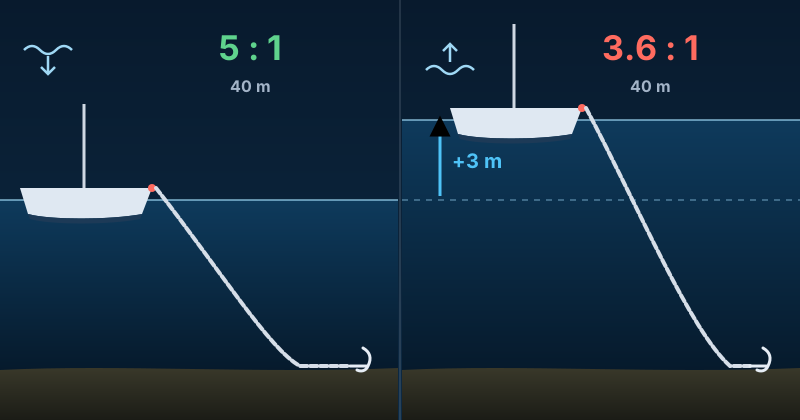
Say you anchor near high water and the tide falls through the night. The chain that looked generous when it went down can end up lying almost flat on the bottom by low water. That is more scope than the depth calls for. It's usually not dangerous, but the swing circle is wider than you planned for, in a bay where your neighbours also set their anchors against the depth they saw at the time. The opposite case is the one that runs out of chain: you anchor near low water and stay past the turn. Scope that looked comfortable against the depth you could see gets thinner as the water rises beneath it, and that tends to show up in a squall, when you least want to find out.
The anchor holding and the keel clearing are two more separate questions
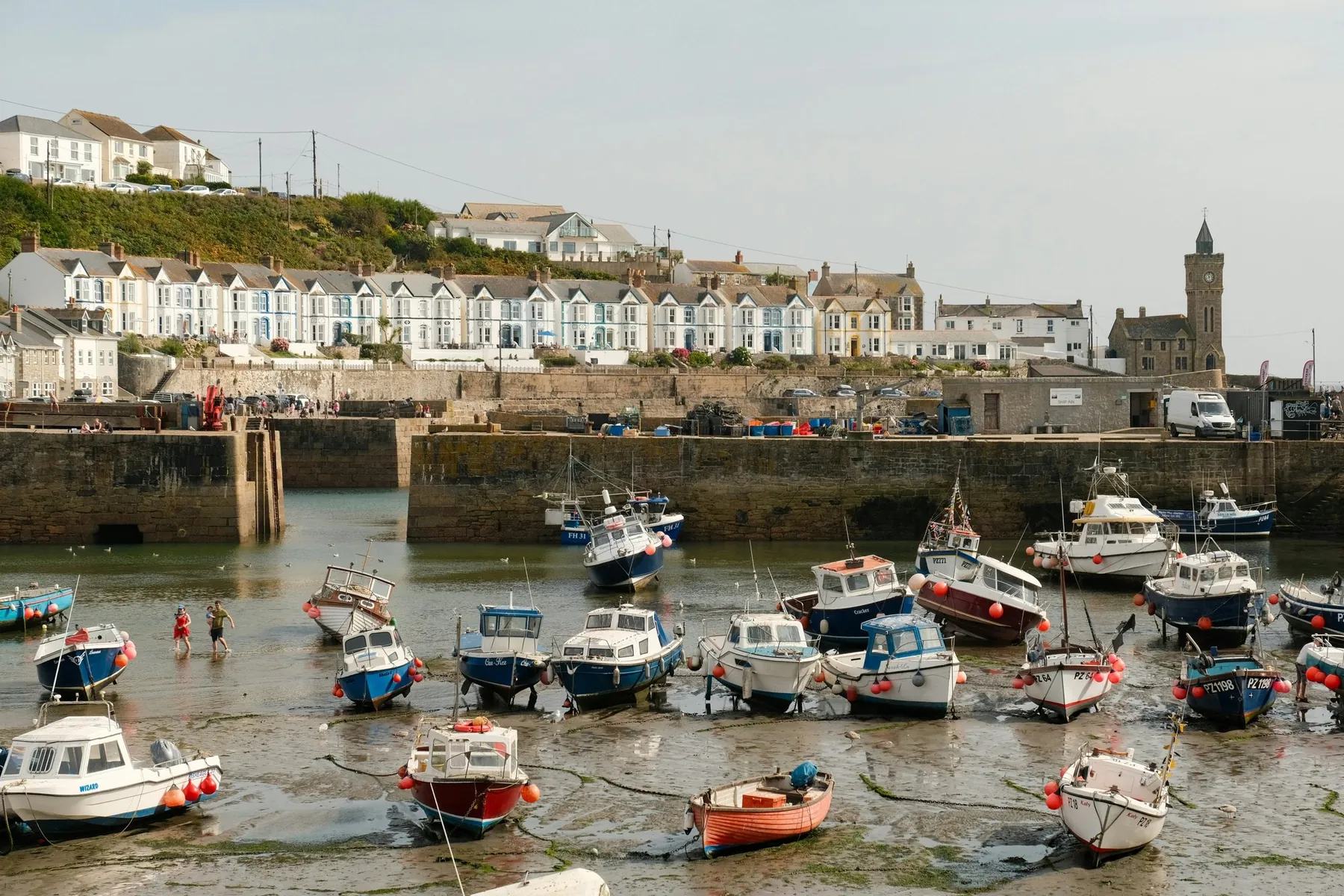
A falling tide doesn't only change the swing circle. In a shallow anchorage it can put the keel on the bottom at low water even though the anchor held perfectly and the alarm never went off, because the alarm watches position, not the depth under the hull. Check the charted depth against your draught at the lowest water of the stay, not the depth you found on arrival. This check is separate from scope and swing room, and it explains most of the "the anchor was fine but we touched bottom" stories.
How CapMate's chain calculator treats the two depths separately
CapMate takes the tide forecast for your position and splits the problem the way it really splits. Chain length is calculated against the highest water expected during the stay, the swing-circle radius against the lowest. Both come from the same forecast window, from now to the stay length you set (typically 6 to 48 hours), and not from the single depth you saw when you dropped the hook. Where the tidal range at the anchorage is small (under roughly half a metre), the tide correction barely changes either number, so the calculator leaves it out rather than add false precision.
What this doesn't replace
None of this replaces watching the actual forecast on the night. A tide table shows what the moon and sun are doing, not what a wind-driven surge adds on top, and some estuaries and bays lag the published tide times by an hour or more because of their shape. Tide-aware scope is a better starting number than an untimed one. Keep checking the depth once the anchor is down.
Questions
Should scope be set for the depth now or the depth at high water?
High water. Scope has to hold for the deepest water of the whole stay, not the depth when the anchor first goes down. If you anchor well before high water, the depth right now understates what the chain will eventually have to cover.
Does my swing circle get bigger or smaller as the tide falls?
Bigger. In shallower water the same length of chain lies flatter, so the boat can range further from the anchor. Size the swing circle for the lowest water of the stay, not the depth at the moment you anchored.
Is slack tide a good time to anchor?
The current is calm, which makes setting the anchor easier. But slack says nothing about whether the water level has hours of rising or falling still to go. It's a good time to drop the anchor, but it doesn't mean the depth has settled.
Can the anchor hold fine but the boat still touch bottom?
Yes. That is a depth-under-the-keel problem, separate from the anchor holding or the alarm firing. It happens most often when you pick a shallow anchorage near high water and stay on through a low water your draught doesn't clear.
How far ahead does CapMate's tide forecast look for the chain calculation?
From now to the stay length you set, typically 6 to 48 hours. The highest point in that window sets the chain length and the lowest sets the swing-circle radius.