On this page
- Measure from the bow roller, not from the waterline
- Which depth your sounder is giving you
- Counting the tide as well as tonight's depth
- Method 1: scope from the gust forecast
- Method 2: chain weight and wind
- Method 3: your own ratio
- The limits, in plain terms
- What the length cannot tell you: what is under the chain
- Questions
Measure from the bow roller, not from the waterline
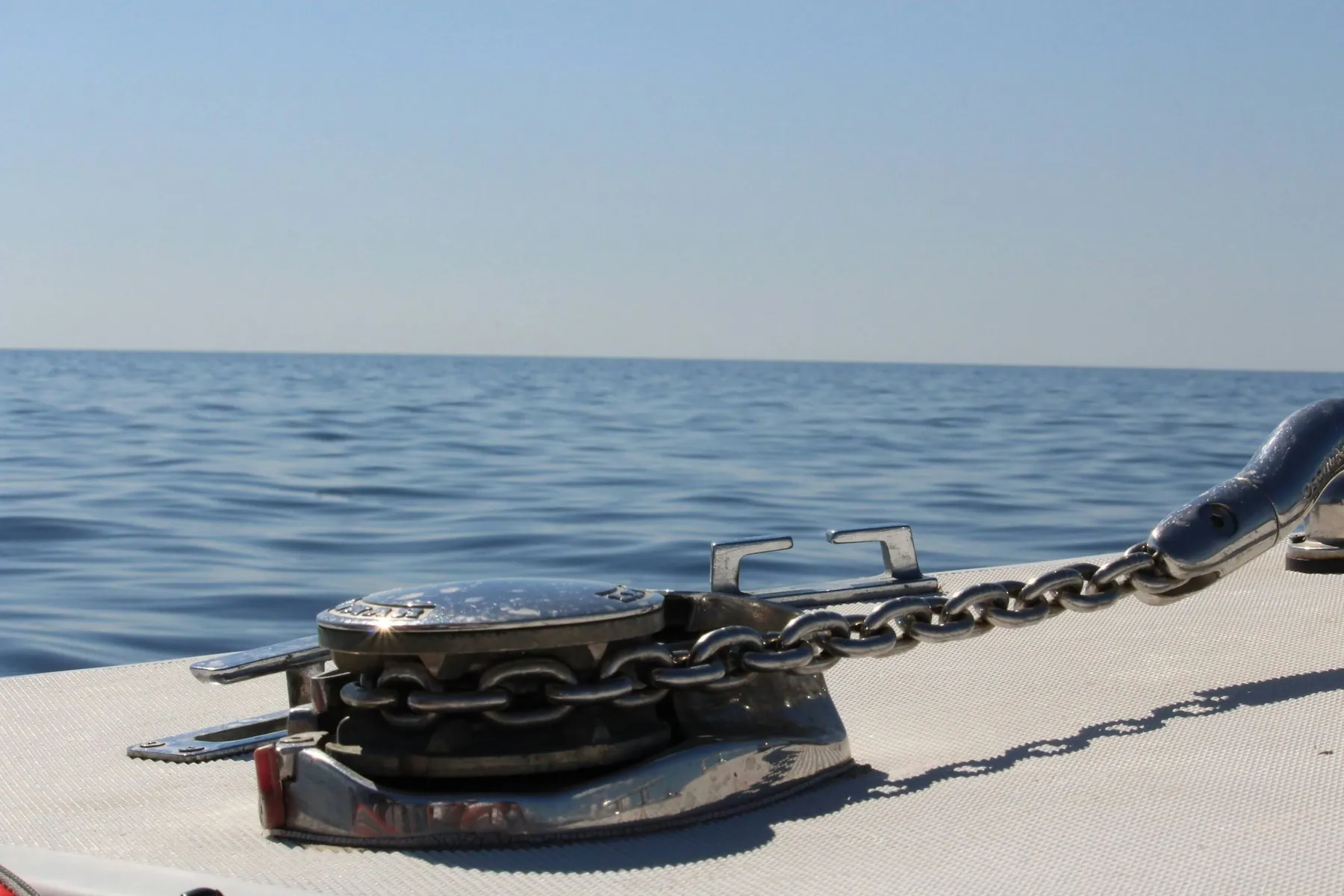
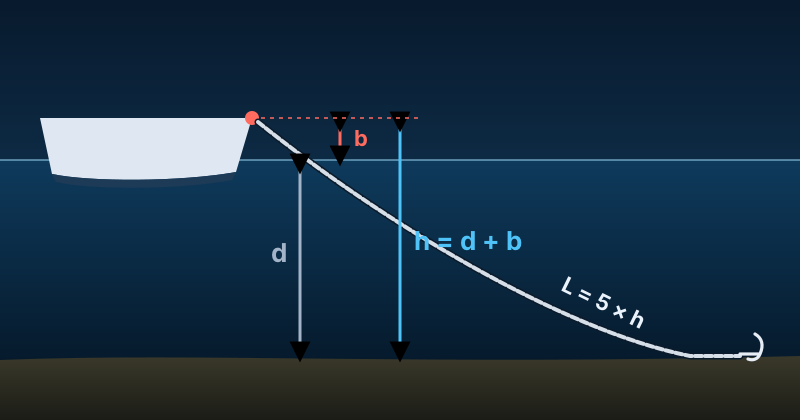
Scope is the ratio of chain out to the height from your bow roller down to the seabed. It is measured from the roller, not from the water's surface. A bow roller sits between half a metre and two metres above the water, and in a shallow anchorage that is a quarter of the total height. In 4 m of water with a 1.5 m roller, 5:1 scope is 27.5 m of chain, not 20.
Most calculators ask for depth and freeboard separately and add them, which comes to the same thing. Some ask for depth only, and those undershoot, worst in the shallow, crowded anchorage where there is no room to drag.
Which depth your sounder is giving you
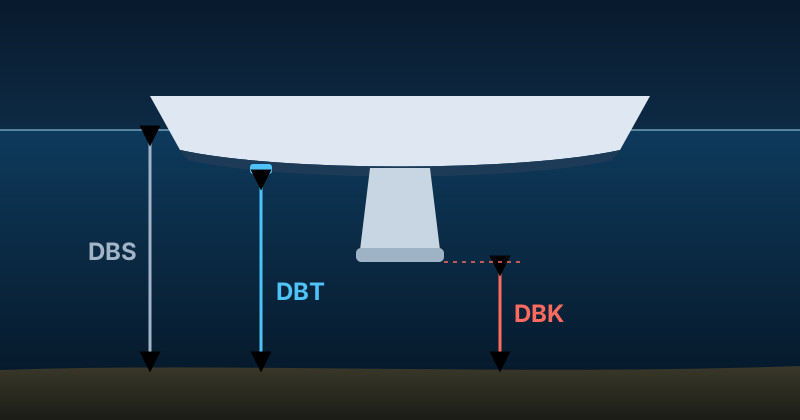
A sounder set to depth below keel (DBK) reads shallower than the surface-to-seabed figure this calculator wants, so add your draught. A sounder set to depth below transducer (DBT) needs the transducer depth added instead. Get this wrong on a boat with 2 m draught and every number below is 2 m of height short, which at 5:1 is 10 m of chain.
CapMate does this conversion from the sounder data it reads off the boat and labels where the depth came from: typed in, from the boat's sounder through a plotter or gateway, from the depth chart, or the same as last night's anchorage.
Counting the tide as well as tonight's depth
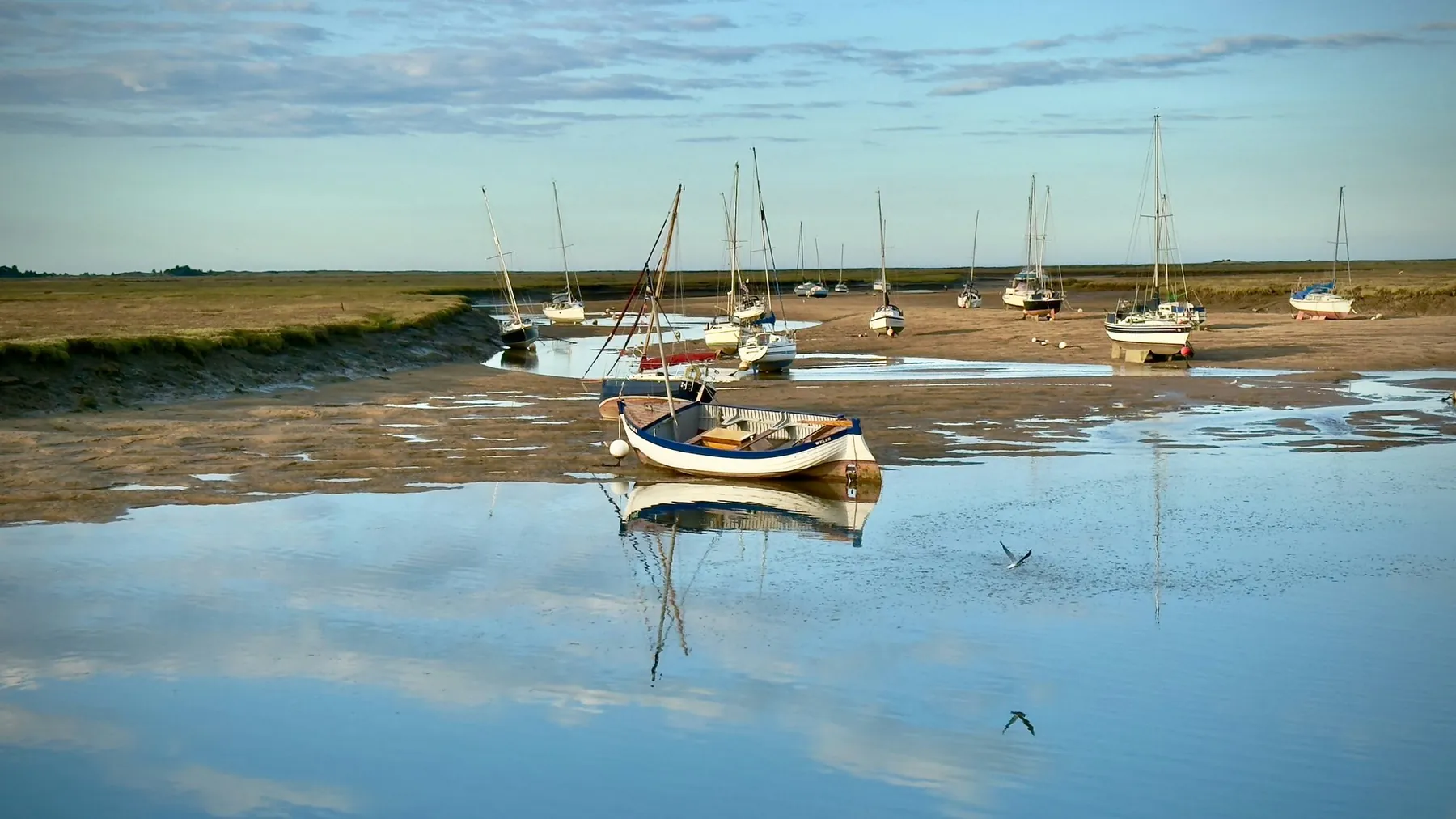
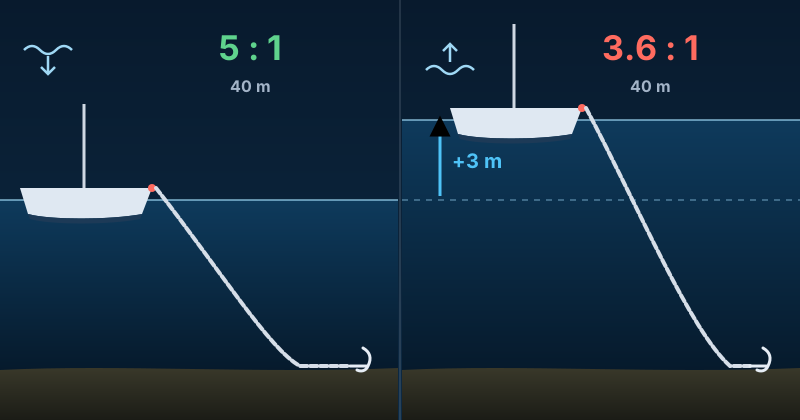
Depth below the surface changes with the tide, and the chain has to be long enough for the deepest moment of the stay, not the moment you dropped the anchor. If you anchor near low water and stay through to high water, the extra depth at high water is what matters for scope, not the shallower figure on the sounder now.
Enter the rise still to come to high water from a tide table or app, and the calculator adds it to the depth before working out scope. Leave the field empty, or enter less than 0.5 m, and the calculator works from the depth you gave it. A rise that small is within the normal spread of a sounder reading and not worth chasing.
Method 1: scope from the gust forecast
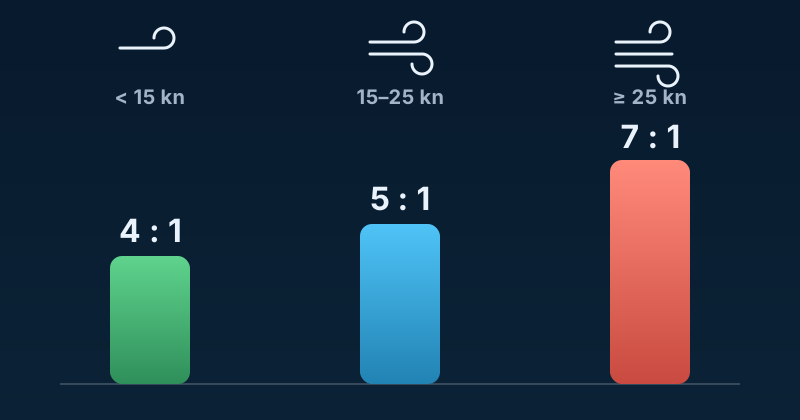
The default. Scope comes from the strongest gust in the next twelve hours: 4:1 below 15 kn, 5:1 below 25 kn, 7:1 from 25 kn up, and 5:1 when there is no forecast at all.
These brackets sit inside published practice, though the published figures don't agree with each other. Rocna's user guide says 3:1 as a minimum, aim for 5:1, up to 8:1 in bad weather. The BoatUS Foundation starts higher: 7:1 recommended, with 5:1 sufficient only for a light anchor on a small boat in good weather. Both were checked on 2 November 2026; the sources are listed at the foot of this page.
The weakness of this method is real: it ignores the weight of the chain, so in deep water it asks for more than you need.
Method 2: chain weight and wind
This method asks a different question: how much chain do you need so that, under the wind load on the boat, the chain at the anchor still lies on the seabed and pulls along it instead of lifting?
L = √(h² + 2·h·H/w), where h is roller-to-seabed height in metres, H is the wind force on the boat in newtons and w is the weight of a metre of chain in water.
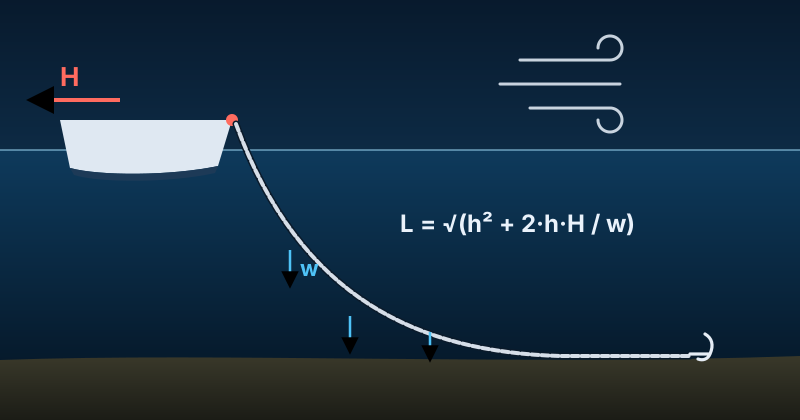
The wind force is H = ½·ρ·(k·L²)·V²·1.5, where k is 0.10 for a monohull and 0.15 for a catamaran, and the 1.5 covers yawing and snatching. It is calibrated against published figures: a 10 m monohull in 50 kn comes out at 608 daN, against the roughly 600 daN Peter Smith gives from Alain Fraysse's work. The same boat as a catamaran comes out half again higher. Chain weight in water is 0.0222·d² kg/m for short-link chain, times 9.81, times 0.87 for steel submerged.
On a deep anchorage this gives less chain than the scope tables, and on a shallow one in strong wind it gives more. It never goes below 3:1: once the wind straightens the chain, scope does the holding and weight does not.
Method 3: your own ratio
Three to ten to one, in steps of one, forecast ignored. Use it when you know the anchorage, or when your insurer, charter company or harbourmaster has given you a number.
The limits, in plain terms
- Never less than 15 m, whatever the arithmetic says. Any shorter and the chain cannot lie along the seabed.
- Always rounded up to the next 5 m, because that is how chain is marked and counted.
- Never more than the chain you carry. The calculator tells you how many metres short you are.
- If the chain is no longer than the roller-to-seabed height, the anchorage is too deep for your boat. Find somewhere shallower.
- Gusts are rounded to whole knots, so a forecast of 14.6 kn is treated as 15 and gets 5:1.
These numbers are a recommendation, not a guarantee. Holding ground, anchor type, swinging room and your neighbours all matter, and none of them is in the formula.
What the length cannot tell you: what is under the chain
On seagrass the right answer is less chain, not more. Chain dragging across a posidonia meadow tears it up, and in much of the Mediterranean anchoring there is restricted or fined. CapMate reads the seabed layer, warns when the chain would come down on grass, and replaces the scope figure with a plain "no more than N metres".
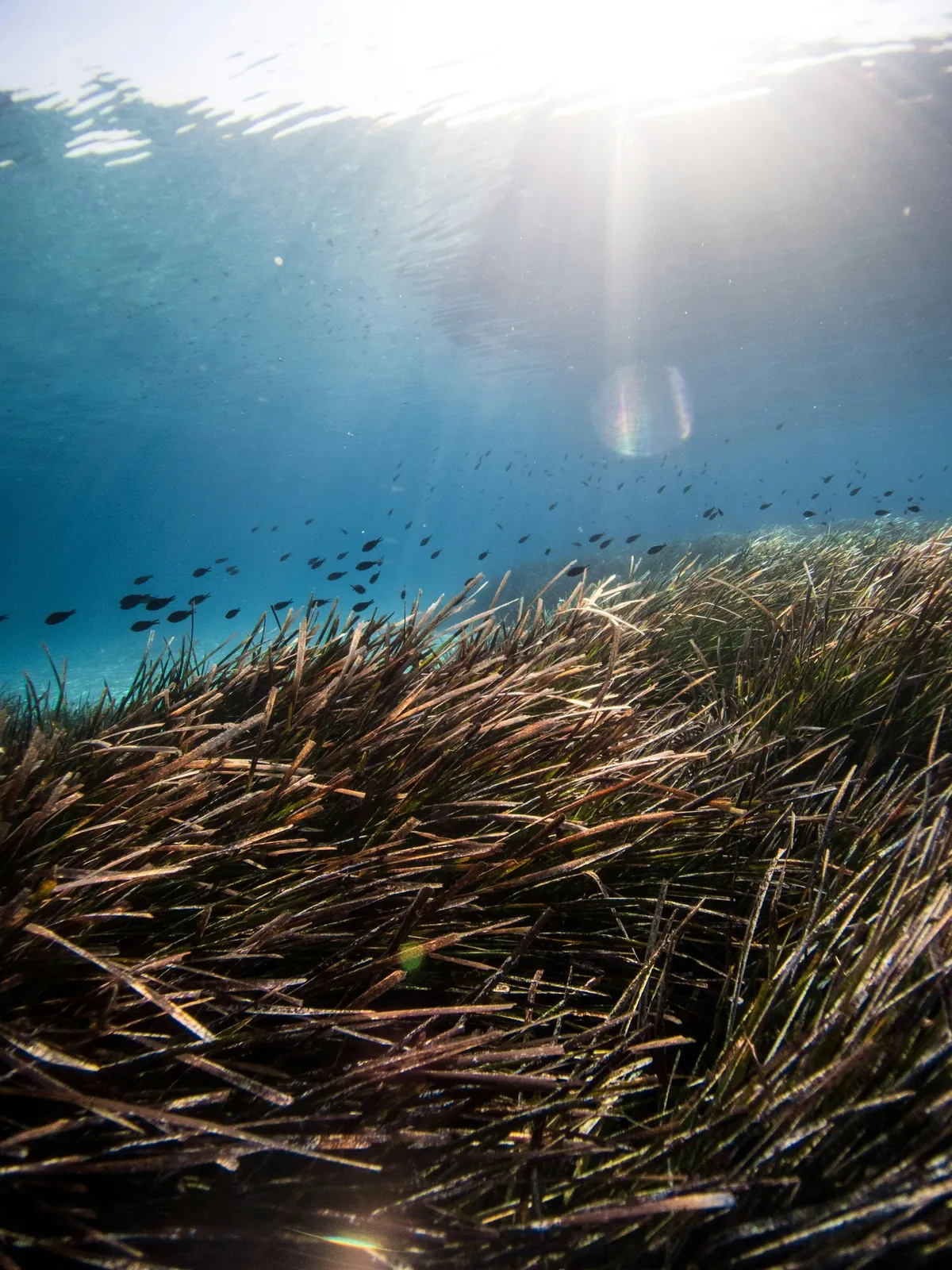
No calculator can know this, this one included. It is the one case where the right length comes from the chart, not the arithmetic.
Questions
How long should my anchor chain be?
For one night: the height from your bow roller to the seabed, times the scope for the forecast gusts (4:1 under 15 kn, 5:1 under 25 kn, 7:1 from 25 kn up), rounded up to the next 5 m and never under 15 m. For the locker: enough for five times the deepest anchorage you plan to use, plus the roller height.
Do you measure scope from the waterline or from the bow?
From the bow roller, because that is where the chain leaves the boat. Add the roller height above the water to the depth below the surface. In a shallow anchorage, skipping it costs you a quarter of the chain you needed.
Is 5:1 scope enough?
Below 25 kn of gusts, usually. Rocna says to aim for 5:1. The BoatUS Foundation is stricter and treats 5:1 as enough only for a light anchor on a small boat in good weather. From 25 kn go to 7:1. In deep water the chain-weight method often shows 5:1 is more chain than you need; in shallow water in strong wind, less.
Does the weight of the chain matter, or only the length?
Both, and which dominates changes with depth. In deep water the catenary, the sag of a heavy chain, does much of the work, so you need less length. In shallow water in strong wind the chain pulls straight and only scope holds, which is why the chain-weight method never goes below 3:1.
What if I don't have enough chain?
The calculator tells you how many metres short you are and what scope you get with everything out. Your options are a shallower spot, a snubber to take the snatch out of the pull, or an anchor alarm that wakes you if the anchor goes. Pretending the number is fine is not one of them.
Does the tide change how much chain I need?
Yes, if you are staying through to high water. The depth that sets your scope is the deepest the water gets during the stay, not the depth when you drop the anchor. Enter the rise still to come to high water and the calculator adds it before working out scope. A rise under 0.5 m isn't worth counting, so leave it empty.
Sources
- Rocna anchor user guide — "Use a 3:1 scope as a minimum, aiming for a 5:1 ratio", up to 8:1 in bad weather — https://rocna.com/user-guide/ (2026-11-02)
- BoatUS Foundation, Anchoring & Mooring — 7:1 recommended, 5:1 sufficient for a light anchor on a small boat in good weather — https://www.boatus.org/study-guide/navigation/anchoring/ (2026-11-02)