
On this page
Charter yacht handover checklist
Who should be there, and who shouldn't
The skipper of record should lead the walk-through with the base technician. Most charter companies ask the rest of the crew to wait with the luggage instead of boarding, partly for insurance reasons and partly because six people opening lockers while you try to count life jackets is how things get missed. If you charter with a hired skipper, they should do the walk-through themselves instead of standing next to you. Their name is on the inventory, and they judge what counts as pre-existing wear.
The technical walk-through
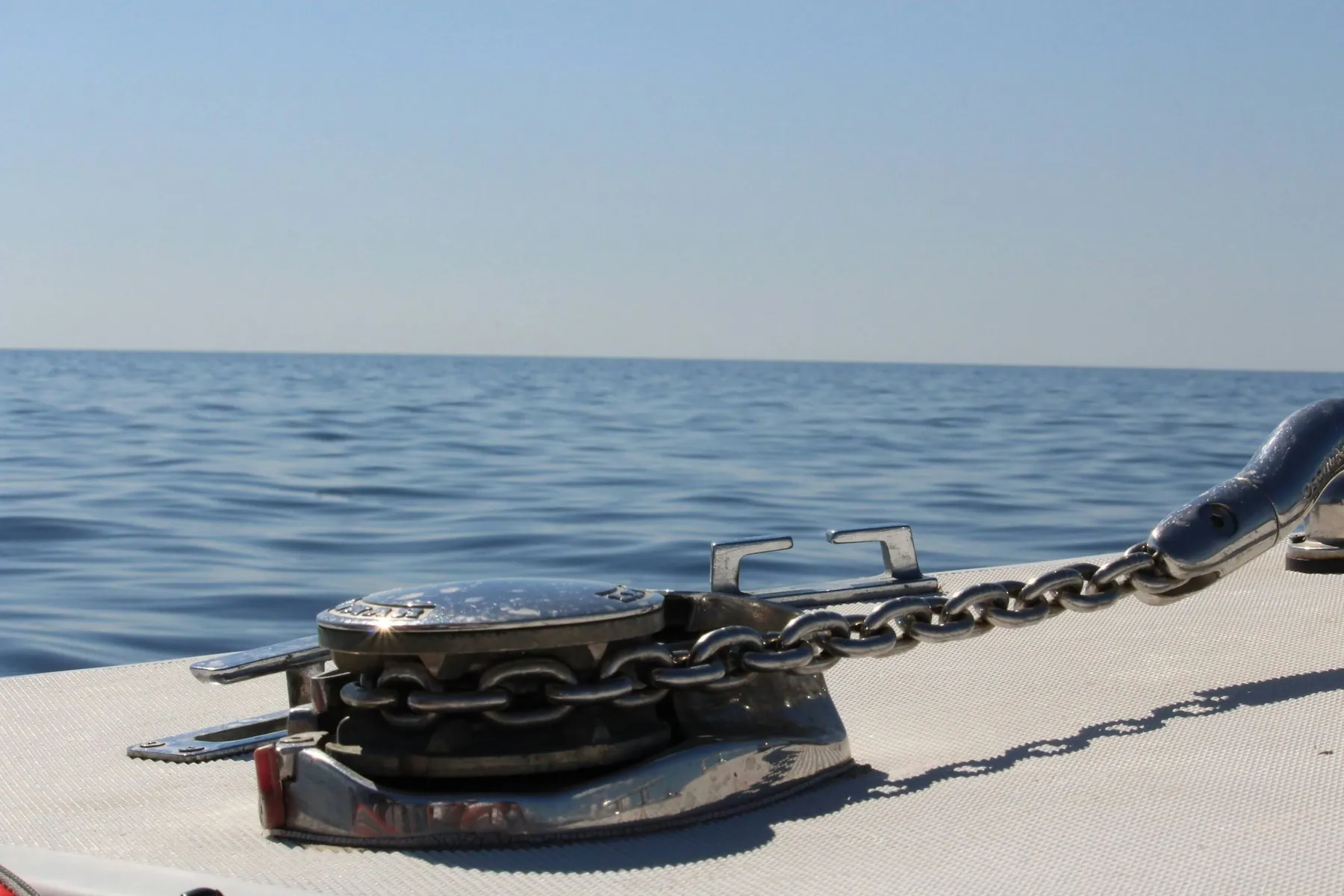
Write down engine hours, fuel level and battery state before you leave the dock. They are the numbers you will be measured against at check-in. Test the sails, standing and running rigging, the anchor and windlass, the tender and its outboard, and the heads; don't just look at them. A toilet that pumps today and jams on day three leads to a dispute about when it broke, and you are better placed if the handover notes say it worked. Write down every existing scratch, scuff or stain on hull, deck, upholstery or dinghy, and photograph it with a timestamp if you can. A mark nobody noted at handover will be read as a mark you made.
Safety gear: the one category you can't improvise
Count life jackets and harnesses against the number of people aboard, not the number the brochure promised. Locate the liferaft and check that its last service date is current; a raft strapped somewhere on deck is not enough. Locate the EPIRB and check its battery status, because a mounted unit isn't necessarily a working one. Confirm the grab bag is aboard and holds what it should. This is not paperwork for its own sake. It is the five minutes that count if the week goes wrong, and it is far easier to ask the technician to replace a dead EPIRB battery at handover than to find it dead offshore.
What to do with a problem you find during the walk-through
Note it on the checklist, photograph it and show it to the technician before you sign, not after. A scratch, a light that doesn't work, an item missing from the inventory: all can be fixed at handover, and all are much harder to dispute once your signature is on the form saying the boat was handed over complete. If something has to be fixed before you leave, such as a dead navigation light or a liferaft past its service date, settle it at the dock. Don't carry it for a week and hope it doesn't matter.
What this has to do with the app on your wrist
CapMate does none of the handover checklist for you. It is a human walk-through and should stay one. The app matters from the moment you sign. A charter week is the case CapMate's pay-for-the-week pass is built for, instead of a subscription that outlasts the trip. Anchor watch, MOB alert and storm warnings are free anyway, as are depth with the shallow-water alarm and the AIS collision alarm, so a crew member without paid access still has the safety features that matter most on the first night at an unfamiliar anchorage. Also confirm during the same walk-through whether the boat's plotter is a brand CapMate reads directly or through a Wi‑Fi gateway. It is easier to ask the base about the plotter model while you stand in front of it than to work it out at anchor on day one.
Questions
How long does a charter handover normally take?
Base companies typically allow 15 minutes to an hour for the technical check-in, depending on boat size and how thorough the walk-through is. Rushing it to get sailing sooner is the most common reason small problems turn up mid-charter.
Who should be present for the handover?
The skipper of record and the base technician. Most charter companies prefer the rest of the crew to wait with luggage and provisions until the technical check-in is finished, so the walk-through isn't done around people and bags.
What happens if I find damage during the walk-through?
Note it on the checklist, photograph it with a timestamp and point it out to the technician before signing. Anything not recorded at handover is generally assumed to be damage from your charter at check-out.
What safety equipment should actually be checked, not just counted?
The liferaft's service date, the EPIRB's battery status and the actual contents of the grab bag. It is not enough that a raft, a beacon and a bag exist somewhere aboard. A mounted EPIRB with a dead battery looks fine at a glance and isn't.
Does a charter week need a different kind of app access than owning the boat?
The core safety features (anchor watch, MOB, weather warnings) don't depend on the access type; they are free either way. A week-long pass fits a charter better than a yearly subscription because the charter itself lasts only a week.
Sources
- Charter yacht handover procedure — skipper-led technical walk-through, timing, crew waiting ashore — https://12knots.com/en/sailing-school/tips/checkin-procedure/ (2026-11-05)
- Yacht check-in checklist — inventory sign-off, safety equipment inspection points (life jackets, EPIRB, liferaft, grab bag) — https://skipperconnect.com/en/yacht-check-in (2026-11-05)